
Losing a front tooth can be a frustrating experience. Whether it happened because of an accident, severe decay, gum disease, or another dental issue, the impact often goes beyond appearance. A missing front tooth can affect your confidence, speech, and even the way you eat.
The good news? Modern dentistry offers reliable solutions that can restore both your smile and your quality of life. Two of the most common options are dental bridges and dental implants. Both can replace a missing front tooth, but they work in different ways and offer different benefits.
If you’re trying to decide which option is best for you, you’re not alone. It’s one of the most common questions patients ask at Gibbons Dental. To help make the decision easier, Dr. Daniel J. Gibbons explains what you should know about dental bridges and implants before moving forward with treatment.
Why Replacing a Missing Front Tooth Is Important
Many people initially focus on the cosmetic side of losing a front tooth—and that’s completely understandable. After all, your front teeth are one of the first things people notice when you smile.
But replacing a missing front tooth isn’t just about appearance.
When a tooth is missing, nearby teeth may begin shifting into the empty space. Over time, this can affect your bite and create alignment issues. The jawbone underneath the missing tooth may also begin to shrink due to a lack of stimulation.
A missing front tooth can also impact:
- Speech clarity
- Chewing ability
- Facial appearance
- Overall oral health
- Self-confidence
The sooner you explore your replacement options, the better your chances of preserving your long-term oral health.
What Is a Dental Bridge?
A dental bridge is a fixed restoration designed to “bridge” the gap left by a missing tooth.
A traditional bridge typically includes:
- One artificial tooth (called a pontic)
- Two crowns placed on the teeth next to the gap
The neighboring teeth act as anchors that hold the replacement tooth securely in place.
Dental bridges have been used successfully for many years and remain a trusted option for replacing missing teeth.
What Are the Benefits of a Dental Bridge?
Many patients choose a bridge because it offers several practical advantages.
Faster Treatment Timeline
In many cases, a bridge can be completed in just a few appointments without requiring surgery.
Natural Appearance
Modern bridges are custom-made to match the shape, size, and color of your surrounding teeth.
Fixed in Place
Unlike removable appliances, a bridge stays securely in your mouth and functions much like a natural tooth.
Reliable Results
Dental bridges have a long history of successfully restoring smiles and improving oral function.
For some patients, these benefits make a bridge an excellent solution.
What Is a Dental Implant?
A dental implant is often considered the closest thing to replacing a natural tooth.
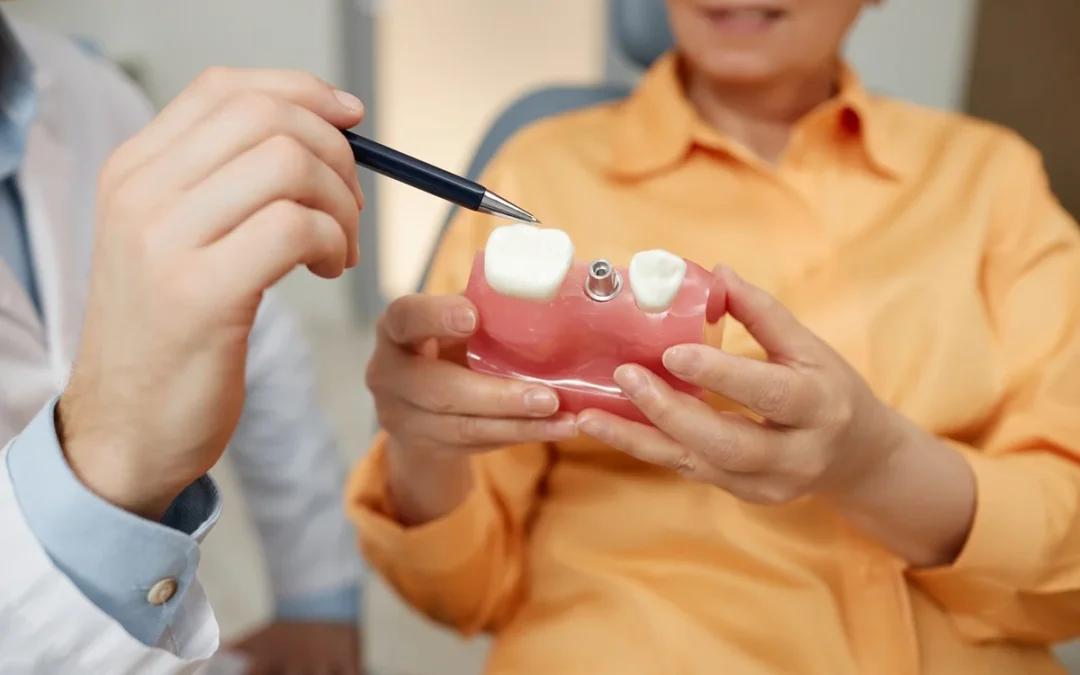
Unlike a bridge, an implant replaces both the visible portion of the tooth and the root beneath the gumline.
A dental implant typically consists of:
- A titanium implant post
- An abutment (connector)
- A custom-made dental crown
The implant post is placed into the jawbone, where it gradually fuses with the bone during healing. Once healing is complete, the final crown is attached.
The result is a strong, stable replacement tooth that looks and functions very much like a natural tooth.
Why Are Dental Implants So Popular?
Over the last several years, dental implants have become one of the most requested tooth replacement options.
Here’s why.
They Preserve Jawbone Health
When a tooth is lost, the jawbone no longer receives stimulation from the tooth root.
An implant replaces that root and helps maintain healthy bone levels.
They Don’t Affect Neighboring Teeth
Unlike a bridge, an implant does not require reshaping healthy adjacent teeth.
This helps preserve more of your natural tooth structure.
They Feel Natural
Many implant patients report that their replacement tooth eventually feels like a normal part of their smile.
Long-Term Durability
With proper care, dental implants can provide long-lasting results for many years.
Bridge vs. Implant: Which Looks More Natural?
When replacing a front tooth, appearance matters.
Fortunately, both bridges and implants can deliver beautiful results.
However, implants often provide a slight advantage when it comes to creating the appearance of a natural tooth emerging directly from the gums.
Because implants help preserve jawbone structure, they may better maintain natural gum contours over time.
That doesn’t mean bridges look unnatural. Modern dental bridges can be extremely lifelike and blend beautifully with surrounding teeth.
The best option often depends on your specific situation.
What About Comfort?
Patients frequently ask whether a bridge or implant feels more comfortable.
Both options are designed to restore function and improve quality of life.
Because implants are anchored directly into the jawbone, many patients feel they provide a more natural chewing experience.
Bridges also function well but rely on neighboring teeth for support.
Most patients adapt quickly to either restoration and enjoy significant improvements compared to living with a missing tooth.
Which Option Lasts Longer?
Longevity is another important consideration.
Dental bridges can provide many years of reliable service when properly maintained.
Dental implants are also known for their durability and may last even longer with good oral hygiene and regular dental care.
However, no restoration lasts forever without proper maintenance.
Regardless of which option you choose, maintaining healthy gums and attending regular dental visits will help protect your investment.
Factors That Help Determine the Right Choice
Every patient is different, which is why there isn’t a universal answer to the bridge-versus-implant question.
Several factors influence treatment recommendations, including:
Bone Health
Adequate jawbone support is important for implant placement.
Overall Oral Health
Healthy gums and surrounding teeth contribute to treatment success.
Treatment Goals
Some patients prioritize preserving bone, while others focus on shorter treatment timelines.
Budget Considerations
Initial costs can vary between treatment options.
Personal Preferences
Comfort level, lifestyle, and long-term goals all play a role.
A thorough evaluation allows your dentist to recommend the option best suited to your individual needs.
Is It Okay to Wait Before Replacing a Front Tooth?
Many patients wonder if they can postpone treatment.
While waiting may seem harmless, delaying replacement can create additional complications.
The longer a tooth remains missing, the greater the risk of:
- Bone loss
- Tooth shifting
- Bite problems
- Increased treatment complexity
Early consultation often provides the greatest number of treatment options.
If you’re missing a front tooth, schedule an appointment today with your dentist to discuss your choices before additional changes occur.
What Happens During Your Consultation?
At Gibbons Dental, Dr. Daniel J. Gibbons takes time to understand your concerns, goals, and oral health needs.
During your consultation, he may evaluate:
- Gum health
- Jawbone support
- Tooth alignment
- Bite function
- Existing restorations
Using advanced diagnostic tools, he can develop a personalized treatment plan designed specifically for your smile.
The goal isn’t simply replacing a tooth—it’s restoring comfort, confidence, and long-term oral health.
Restore Your Smile with Confidence
Losing a front tooth can feel overwhelming, but you don’t have to live with the gap forever. Today’s dental technology offers highly effective solutions that can restore both appearance and function.
Whether a dental bridge or dental implant is the better choice depends on your unique needs, oral health, and treatment goals. That’s why personalized guidance is so important.
At Gibbons Dental, Dr. Daniel J. Gibbons is committed to helping patients make informed decisions about their dental care. If you’re exploring options for replacing a missing front tooth, his team can help you understand the benefits of each treatment and determine which solution is right for you.
Don’t let a missing tooth affect your confidence any longer. Schedule an appointment today with your dentist at Gibbons Dental and take the first step toward restoring your smile.
FAQs About Front Tooth Replacement Options
- Is a dental implant better than a bridge for a missing front tooth?
Both options can be effective. Dental implants preserve jawbone health and don’t affect neighboring teeth, while bridges may offer a faster treatment timeline. - How long does it take to get a dental implant?
The process varies by patient but often includes healing time after implant placement before the final crown is attached. - Can a dental bridge look natural in the front of the mouth?
Yes. Modern dental bridges are custom-designed to match surrounding teeth and can provide highly natural-looking results. - What happens if I don’t replace a missing front tooth?
Delaying treatment can lead to bone loss, shifting teeth, bite problems, and additional oral health concerns over time.